Which Wedding Flowers Have the Lowest Impact?
@vasenotes64
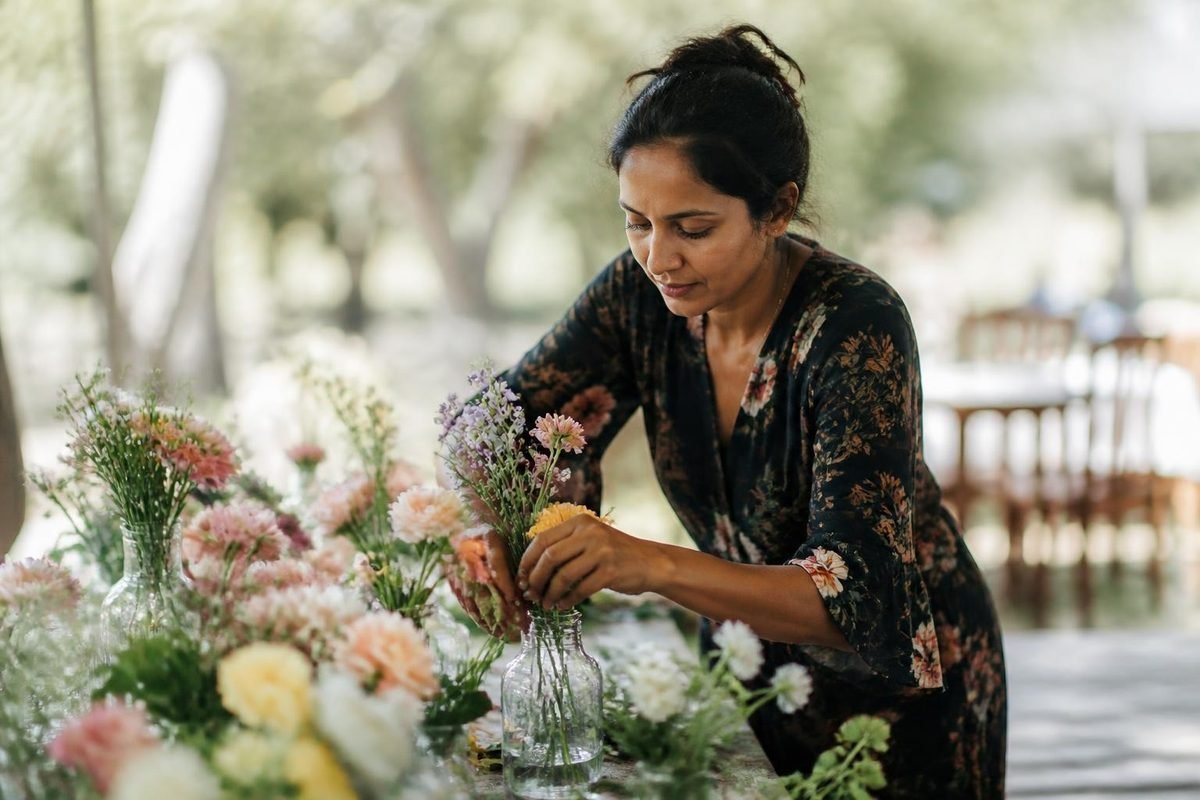
Seasonal flowers grown outdoors near your wedding are often among the lowest impact choices, especially if they do not need air transport or heated greenhouses. Potted plants and flowers grown without synthetic pesticides can also be good options, though their impact depends on how they are grown, transported and used.
Choose flowers in season
No single flower is always the greenest choice. A stem grown outside in its natural season may need less energy than the same flower grown under heat and artificial light. Local availability varies by climate, so ask growers what will be flowering around your date.
Outdoor growing still uses resources, including water and land. Ask how a grower manages watering, pests and soil rather than assuming every local flower has the same impact.
Keep your plans flexible. A colour palette and a loose shape give a grower room to use what is ready to cut. That can be more practical than requesting one exact variety months in advance.
Ask how flowers travel
Distance matters, but it is not the whole story. Heating a greenhouse can use substantial energy, while transport methods differ in their emissions. Flowers flown long distances can have a higher transport impact than flowers moved by road over shorter distances.
Ask where the stems were grown, not just where they were bought. A local florist may source flowers from nearby farms as well as from overseas. If a flower is imported, ask about its journey and growing conditions before ruling it in or out.
Consider plants and simple arrangements
Cut flowers grown outdoors are not the only option. Choose materials that suit the venue and have a clear use after the wedding.
- Seasonal cut flowers: Ask a nearby grower for a mix harvested close to the event.
- Potted plants: Use plants that can be kept, given away or planted in suitable conditions afterwards.
- Reused containers: Fill jars or vases you already own, or borrow them from someone else.
- Foliage: Use greenery from a responsible source to give arrangements volume with fewer cut stems.
Potted plants are not automatically low impact. They need pots, growing materials, water and transport. Choose plants that guests or the venue can realistically care for, rather than buying them only to discard them.
Plan for less waste
Use arrangements in more than one place if the schedule allows. Ceremony flowers might move to the reception, for example. Make sure someone is responsible for moving them safely and that the containers fit both spaces.
Ask your florist to arrange stems without floral foam. Chicken wire, flower frogs and other reusable supports can hold flowers in containers. After the event, separate plant material for composting where local facilities accept it, and keep containers and supports for reuse.
Start with what is growing in season, then ask straightforward questions about energy, transport and waste. A flexible design makes it easier to use available flowers and make fewer unnecessary purchases.
Further reading: All Saints' Day in Poland